
Speech & Hearing Month: The Role of Speech-Language Pathologists at Every Stage of Life
May 19, 2026
|
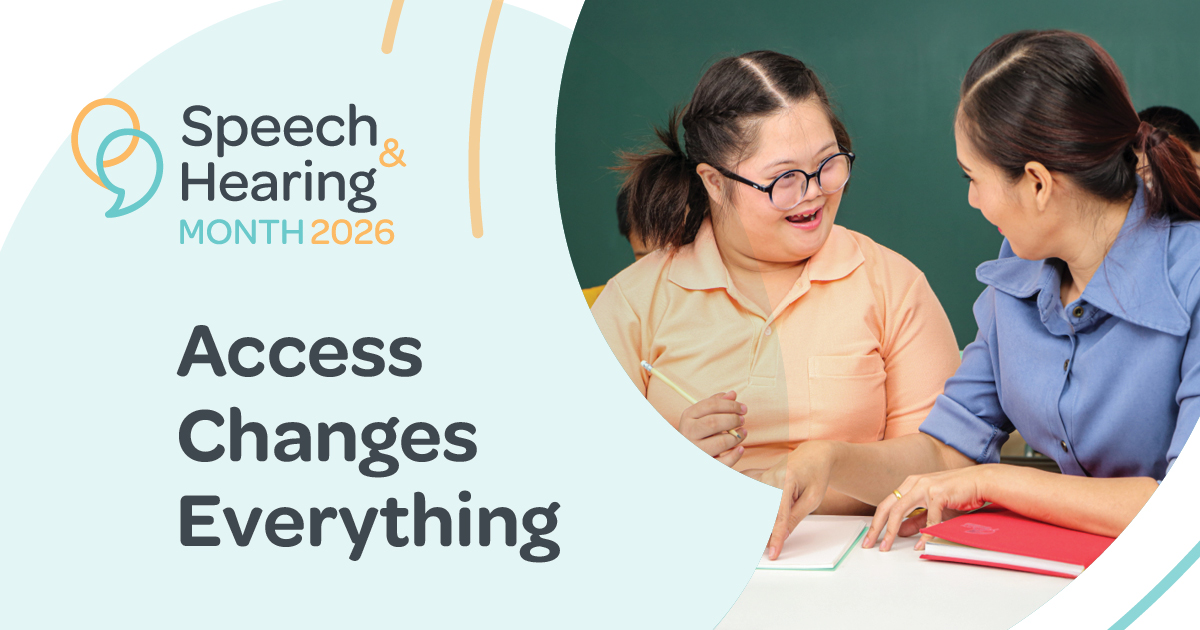
Every May, Canadians recognize National Speech and Hearing Month, a time to raise awareness about communication health and the important role of speech-language pathologists (SLPs), audiologists and communication health assistants.
The 2026 Speech and Hearing Month theme, ‘Access Changes Everything,’ highlights the importance of timely access to communication health services at every stage of life. With the right support, individuals can experience better health outcomes, stronger social connections and greater participation in school, work and community life.
At VHA Home HealthCare (VHA), our speech-language pathologists support people of all ages with speech, language and swallowing challenges, helping clients and families navigate some of life’s most meaningful and difficult moments. This month is an opportunity to recognize and thank our SLP team for the meaningful impact they have on the lives of our clients and families.
Care Across the Lifespan
Speech-language pathologists support individuals from infancy through older adulthood, addressing a wide range of communication and swallowing needs. SLPs assess and treat difficulties with speech, language, voice, fluency, cognition and swallowing, helping people improve communication, regain lost abilities, and maintain independence in daily life.
SLPs work in a variety of settings, including hospitals, schools, rehabilitation centres, private clinics, long-term care homes, and in clients’ homes. Care needs can look different at each stage of life.
Infants and Early Childhood
In the early stages of life, SLPs support feeding and early communication development. They help newborns and caregivers with feeding and swallowing challenges, offering practical strategies for positioning, safe swallowing, and breast and bottle feeding. As children grow, SLPs support early communication and language development—whether that’s first words, building sentences, or helping children communicate in other ways when they’re nonverbal.
Children and Adolescents
In school-aged children and adolescents, SLPs support children experiencing articulation disorders, language delays, learning disabilities, stuttering, and social communication challenges associated with autism spectrum disorder or other developmental differences. They use individualized assessment, therapy and communication strategies to help children communicate more effectively at school, home, and with peers.
Adults
In adulthood, SLPs support individuals following illness, injury, or neurological conditions, including stroke, traumatic brain injury, Parkinson’s disease, and head and neck cancer. These conditions can impact communication, swallowing, nutrition and daily functioning. SLPs help individuals adapt to these changes by supporting safe swallowing, independence and quality of life.
End-of-Life Care
In end-of-life care, SLPs focus on preserving communication and quality of life for as long as possible. They support safe swallowing, comfort and nutrition, while helping individuals express needs and make decisions. When speech becomes limited, they introduce alternate communication methods and support families in maintaining meaningful connections.
VHA Voices: Jodi Skinner, Speech-Language Pathologist

Jodi Skinner, SLP
To help mark Speech and Hearing Month, we spoke with VHA speech-language pathologist Jodi Skinner to learn more about what inspired her career, her work in home care and what makes this care setting unique. Here’s what Jodi had to say:
“I was drawn to this field after being exposed to communication and swallowing challenges early in life. My brother has cerebral palsy, and my grandmother had amyotrophic lateral sclerosis (ALS), which I think shaped my understanding of just how important this work is.
I started my career in the hospital, but moving into home care changed the way I see my field. In clients’ homes, everything is more personalized—we’re using their own food, routines and environments. It allows us to provide practical, tailored recommendations and hands-on coaching with clients and families, so strategies actually stick. This turns it into a collaborative process, not just bedside instruction.
Through my work, I get to meet diverse clients with a wide range of needs and travel throughout the community to different settings. Every day is interesting and something new. It’s incredibly rewarding when a client tells you that a strategy or a recommendation has made a real difference in their daily life. This is my 20th year practicing, and I still genuinely love what I do.”
During National Speech and Hearing Month, we recognize the impact of speech-language pathologists in helping individuals and families connect, communicate and participate more fully in daily life. Thank you to Jodi Skinner and all of our VHA speech-language pathologists for the important work you do every day.
For more information on how an SLP can help you or a loved one, call VHA’s Enterprise Health Solutions team at (416) 489-2500 ext. 4649 or email ehs@vha.ca.