
It takes a village: one family’s palliative care experience
August 28, 2026
|
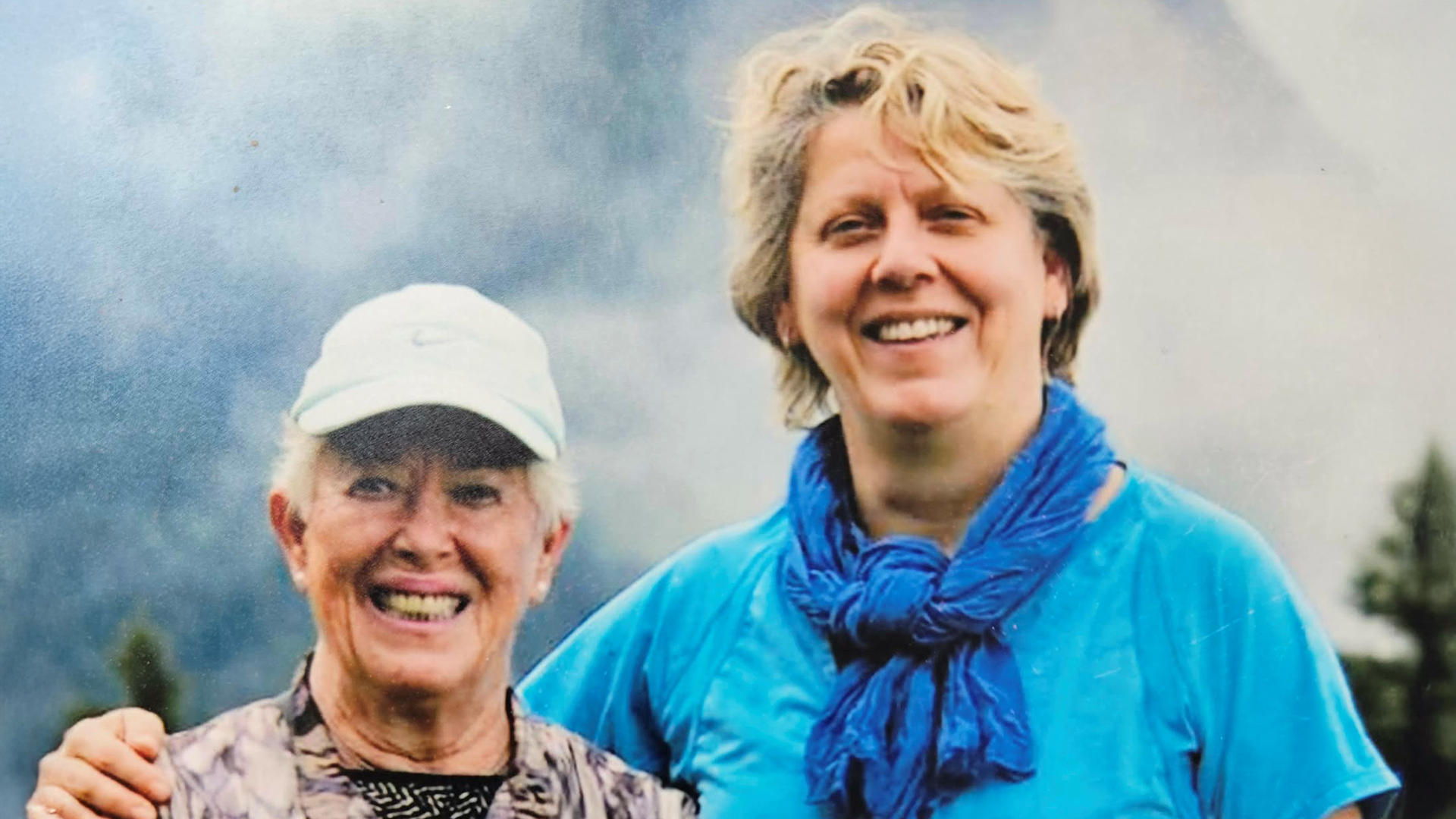
Losing a loved one is never easy but knowing that your family member is in good hands during a difficult time can give an indescribable peace of mind. In Oct 2024, Marion’s family, including her daughter and primary caregiver Suzanne, were caught off guard when she was diagnosed with bile duct cancer. “She showed no symptoms and we weren’t expecting any type of sickness. Once we found out, we were given a two to three month timeline.” recalled Suzanne. “Because of her age and the type of cancer, there wasn’t really a treatment plan for her so we decided to start palliative care and go home.” Marion’s house had been her home for 61 years. It had been Suzanne’s childhood home and neither of them saw any reason why she should leave now if she didn’t have to.
Despite the initial timeline, Marion spent close to the next eighteen months in fairly good health and in high spirits. She was assigned a care team that would be there for her throughout her journey including Vivian, a registered nurse, who would act as her primary nurse through her palliative journey.
Vivian is the type of nurse that describes nursing as her calling. “I love taking care of people,” she says. “Providing that compassionate care to palliative clients is so important. These are the last days of their lives. Making sure both my clients and their families are as comfortable as possible is a part of my job that I really take to heart.”
During these earlier days, when Marion was feeling well, Vivian would check in each week to see how she was doing. This routine continued until April of this year when she began showing more symptoms. After this point, a gradual decline began with short incremental steps downward with plateaus between each step. This continued until one day in May, when the next descending step led to a sharp decline in Marion’s health.
“One day she went for a nap. Before laying down, she was fine, but when it was time to wake her up, she could no longer move her body,” recalls Suzanne. “That’s when it really kicked in for me.”
Suzanne had already made her decision that when the time came, she wasn’t going to bring her mother back to the hospital. With that in mind, she called Vivian and told her about her mother’s updated condition. Vivian came to the house right away and provided support as Marion’s palliative plan progressed to the next stage.
With a call to the care coordinator, a hospital bed was delivered to the house within three hours to ensure Marion was comfortable. The next day supplies began to arrive and daily PSW visits commenced.
“The whole rate at which everything fell into place was amazing. Everything we needed basically showed up at our door and we were set up to finish this journey at home.”
Thanks to the relationship that Suzanne and Marion had already built with Vivian, they felt reassured that Marion was in good hands as she transitioned into the next stage of the palliative journey.
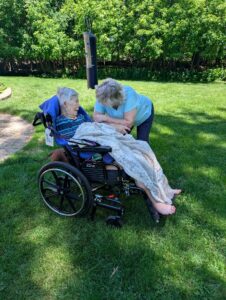 One of the personal benefits of receiving care at home was the convenience for visits from family, neighbours, friends, and especially dogs. Marion had always been an animal lover and staying at home during her last days also meant having the company of the loving family dogs, who would often curl up and lay down with her – something which she would have never been allowed anywhere other than her home. Even Vivian built a caring relationship with these furry friends during her visits. A visit from an occupational therapist led to the procurement of a lift and tilted wheelchair so she could take trips out into the backyard garden and enjoy a small piece of nature as the dogs played.
While Vivian supported with medication, bed sore prevention, symptom management, and other physical concerns, a team of PSWs provided day-to-day care as well education to Suzanne on how to provide care when she was on her own with her mother.
“The PSWs were a super important in those last few weeks. Each and every one was kind, knowledgeable and supportive. Even though they came twice a day, there was still the rest of the time when it was just me.” says Suzanne. “I had to learn a lot of new skills in a short period of time and I’m not sure if I could have done it without their help and guidance.”
Being the primary caregiver for a loved one is hard but can also feel slow sometimes. For Suzanne, it could be a little isolating and having team members drop by to talk with her as they cared for her mother made her feel even more supported.
Once the sombre day arrived and Marion passed away peacefully in bed during the night, the care that her team provided was also there for Suzanne. Vivian came the next morning and a few days later, Zewdenesh, Marion’s most regular PSW stopped by to sit on the patio with her and talk as a true friend.
Looking back, Suzanne and her family feel gratitude for being able to care for Marion at home thanks to the support of her palliative team. As a final reflection, she shares “They say it takes a village to raise a child; turns out the same is true to lovingly shepherd a soul out of this life.”